Gabon – Take two

Gabon
- The Revised Finance Law 2026 was published by the government on 21 July, following its official adoption on 17 July.
- The legislation is based on measures included in the supplementary budget bill, which updated the state budget for 2026 with lower revenue and expenditure forecasts.
- The budgetary changes illustrate Gabon’s constrained fiscal and debt positions.
- Elevated spending and a heavy reliance on borrowing will likely continue to delay a new credit arrangement with the International Monetary Fund.
- The country’s medium-term GDP growth prospects face several headwinds.
- The risk of widespread protests or unrest over socio-economic concerns remains low.
The government published on 21 July the Revised Finance Law 2026. The new law is based on the supplementary budget bill (PLFR), which was officially adopted by president Brice Clotaire Oligui Nguema on 17 July. The adoption follows the bill’s approval by the Council of Ministers on 22 May and subsequent debate over its contents in the National Assembly in recent weeks.
The final budget
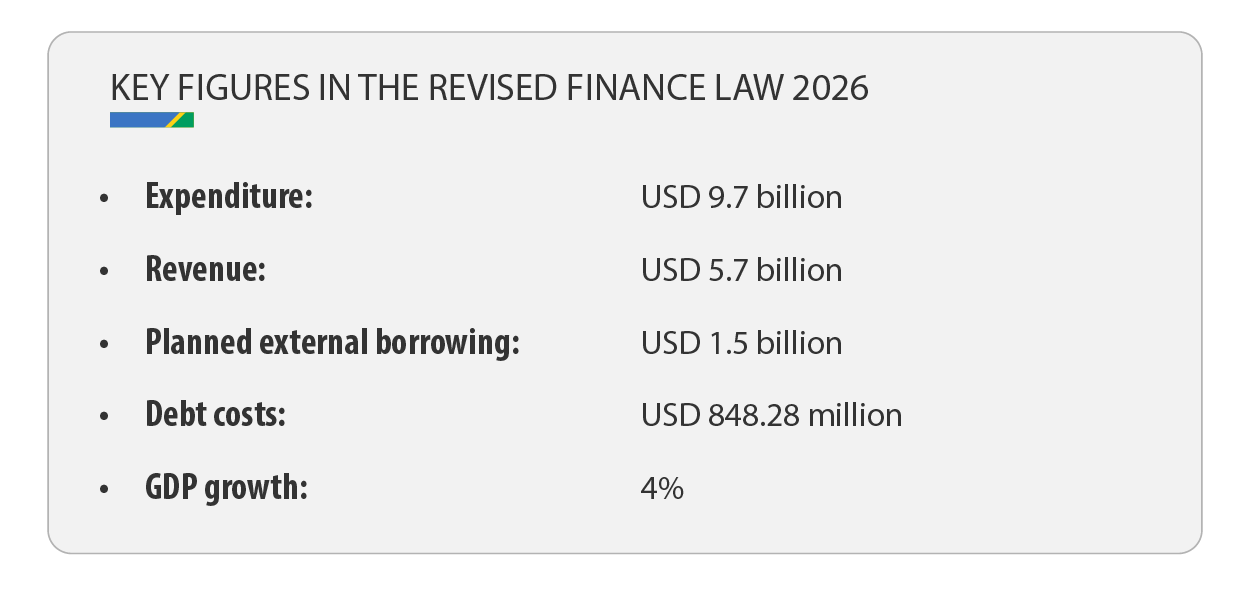
The revised finance law places overall expenditure at XAF 5.5 trillion (USD 9.7 billion), down from the XAF 6.36 trillion (USD 11.07 billion) approved in late 2025. Estimated revenue has also been lowered to XAF 3.24 trillion (USD 5.7 billion), down from an estimated XAF 4.17 trillion (USD 7.26 billion) in the original budget. Overall, the revised finance law indicated that the budget still faces a funding gap of up to XAF 915.6 billion (USD 1.59 billion). Accordingly, the law authorises the state to borrow up to USD 1.5 billion from external sources, alongside a further XAF 424.9 billion (USD 746 million) in planned domestic treasury bond issuances.
The drop in revenue was attributed to lower-than-anticipated earnings from key revenue sources since the start of 2026. This includes a 47 percent drop in export duties and taxes, a 30 percent decrease in profit-sharing oil revenue, and a 97 percent drop in corporate tax receipts from the mining sector. Weaker production of certain goods such as timber, rubber and palm oil has also constrained revenue generation. In an effort to partly mitigate the drop in revenue, the revised finance law does include several new tax measures. The value-added tax rate remains 18 percent, but a new national housing fund levy of 3 percent is introduced, alongside higher environmental protection tax rates and increased excise duties on alcohol and tobacco.
The drop in expenditure was achieved through various spending cuts, the most notable of which was to the investment budget. Investment spending totals XAF 1.17 trillion (USD 2.07 billion) in the supplementary budget, compared to XAF 2.14 trillion (USD 3.79 billion) in the original budget. Despite this, the finance law outlines an expected 16 percent rise in debt costs. In the PLFR, debt costs total XAF 487.55 billion (USD 848.28 million), from XAF 419.84 billion (USD 730.47 million) in the initial budget.
For the fund
Gabon’s weakening debt position had already been highlighted on 17 July, when the Directorate General of Debt (DGD) disclosed that outstanding public debt had risen by around 23.1 percent over the course of 2025. The DGD reported that total debt measured XAF 8.78 trillion (USD 15.3 billion) at the end of December 2025; domestic debt was marginally higher than external debt due to a validation of arrears by the Task Force on Public Debt and greater borrowing on the regional financial market. The DGD also indicated that arrears rose by 72 percent to XAF 459.5 billion (USD 802 million), with this contained to debt owed to bilateral partners, foreign commercial suppliers and validated domestic creditors.
The disclosure of a rise in debt follows the government’s announcement on 17 June of a comprehensive audit into the country’s debt position and public borrowing between 2016 and 2024. Finance minister Thierry Minko stated that the exercise is intended to strengthen budgetary transparency and improve the reliability of public accounts. The results of this exercise are expected to be reported within the coming weeks. The primary aim of the exercise is to improve debt reporting and transparency at the behest of the International Monetary Fund (IMF), given ongoing negotiations over a new credit arrangement. Gabon formally requested a new IMF programme in March 2026, but since then there has been limited notable progress over negotiations. Minko indicated that the findings of the debt audit will provide a basis for technical discussions with the IMF.
Consequences
The state’s debt burden was a primary point of concern cited by Moody’s Ratings in its decision to revise Gabon’s credit outlook from stable to negative on 24 June. Moody’s affirmed the country’s long-term local and foreign currency issuer ratings at ‘Caa2’ with the outlook reflecting several downside risks that could place further pressure on the country’s credit profile in the coming months. Most notably, Moody’s cited a limited access to financing, accompanied by significant financing needs of an estimated 15 to 20 percent of GDP annually over the next three years. The country continues to rely significantly on regional market issuances, which constituted around 22 percent of GDP in 2025. The agency also indicated that the ongoing public debt audit could lead to an increase in government debt metrics and that this, alongside continued fiscal pressures, would raise the likelihood of further debt exchanges that could be classified as distressed and constitute a default.
Moody’s noted that Gabon’s constrained debt position is due to a precedent of off-budget expenditure and arrears accumulation, alongside higher spending needs on social development and economic diversification by the new government following the conclusion of the political transition in 2025. The ratings agency indicated that the fiscal deficit is expected to remain elevated over the medium term, but should drop somewhat in 2026 to around 6.5 percent of GDP, from 8.5 percent in 2025. The debt burden is expected to continue to rise to around 88 percent of GDP by 2027, from around 78.9 percent at the end of 2025. Moody’s noted that the requested programme with the IMF could improve the country’s near-term fiscal position, but that continued international debt issuances are expected to incur elevated costs due to the country’s constrained debt position, which will weigh on debt affordability.
The decision to maintain the credit ratings was based on a balanced assessment of these downside risks, combined with a handful of positive factors. These include Gabon’s higher income compared to regional peers, and relative macroeconomic stability supported by the country’s membership in the Economic and Monetary Community of Central Africa (CEMAC).
Growth prospects
Gabon’s fiscal concerns have been elevated over recent years by a decline in the performance of the mainstay oil sector, driven primarily by maturing oil fields and a gradual drop in production. This was highlighted in the supplementary budget, with total revenue from the oil sector projected to drop by 21 percent compared to estimates in the initial budget. The drop is despite elevated global oil prices at present due to the Middle East conflict. As a result of this and other underproductive sectors, the new budget lowered the GDP growth forecast to 4 percent, from an initial 6.5 percent forecast in 2026. Notably, this growth is set to be mainly driven by the non-oil sector, which is expected to grow around 4.4 percent in 2026.
Despite this, investor interest continues to be strong in Gabon’s extractive sectors. In the oil sector, Norwegian multinationals BW Energy and Panoro Energy, alongside the Gabon Oil Company, approved in May the development of the USD 300 million Bourdon offshore oil project. The project is estimated to contain 25 million barrels of recoverable oil reserves and is expected to become operational by the first quarter of 2028.
Gabon also continues to attract key investment into its mining sector. Most notably, the government signed on 20 July a memorandum of understanding (MoU) with French mining group Eramet and its Gabonese subsidiary, Comilog, to expand local processing of manganese ore. The MoU sets a roadmap to process up to 700,000 tonnes of manganese ore per year in Gabon by the end of 2031. The company also agreed to assess three industrial projects: a manganese oxide plant near Libreville, the refurbishment of the Moanda Metallurgical Complex, and a new manganese alloy plant on the coast.
The Signal
The budgetary changes outlined in the new finance law illustrate Gabon’s constrained financial position. The changes made in the supplementary budget, and confirmed through the new finance law, are primarily a reflection of Gabon’s constrained fiscal position and inability to bear the financial burden of the initial budget. In the original budget, expenditure had been increased by a notable 51 percent compared to 2025. This was not matched by a similar rise in revenue, which had resulted in an estimated fiscal deficit of around 15 percent of GDP. While both revenue and expenditure are lower under the new finance law, the deficit is expected to be marginally lower. The finance law did not specifically outline the new deficit, but the International Monetary Fund (IMF) has forecast a deficit of around 9.97 percent of GDP, somewhat higher than the deficit of 6.5 percent forecast by Moody’s. Gabon entered the year in an already constrained fiscal position due to consecutive fiscal deficits over recent years as a result of elevated spending by the interim administration following the August 2023 coup. This spending has extended the country’s debt burden, with the government debt-to-GDP ratio having risen to around 78.9 percent in 2025, from 70.9 percent in 2024. Notably, the country’s fiscal and debt positions are likely to remain constrained despite the marginally lower spending. In the near term, external factors related to the Middle East crisis, including elevated import costs due to the country’s reliance on refined petroleum imports and supply disruptions, are likely to weigh on GDP growth and revenue generation. The government’s utilisation of subsidies to limit passthrough costs for the population will also present a further fiscal burden. Similarly, debt costs are likely to require continued elevated spending, with more than 59.5 percent of the country’s total debt set to mature in 2026 and 2027. Elevated recourse to regional markets to fund the fiscal shortfall in 2026 (and likely 2027) will weigh on broader debt metrics, with the government debt-to-GDP ratio forecast by the IMF to rise to around 86.1 percent in 2026 and 94.3 percent in 2027.
Elevated spending and a heavy reliance on borrowing will continue to complicate negotiations with the IMF. To some extent, the spending reductions in the new budget are likely an attempt to appease the IMF, further progress ongoing negotiations towards a new credit arrangement, and illustrate some commitment to reform. However, the new budget is unlikely to effectively address concerns from the IMF over the state’s fiscal trajectory. Continued unrestrained borrowing, including up to USD 1.5 billion planned borrowing from international markets, may receive some pushback from the IMF, as will the increase of certain government subsidies. The IMF is likely to require more significant adjustments and progress towards improved fiscal consolidation prior to any official agreement on a new arrangement. To this end, debt management is expected to emerge as a notable point of contention. Gabon accumulated arrears to an amount of around 4.8 percent of GDP in 2025 and, given that the state’s fiscal position continues to weaken while reliance on borrowing increases, further arrears are likely to accumulate over the coming years. The state has previously been behind on payments to a number of creditors and suppliers including the World Bank, Turkish energy firm Karpowership, and several domestic banks. The IMF will likely request a clear debt management plan during ongoing negotiations. Another key sticking point over the near term could be government subsidies, which have cost the state over XOF 100 billion (USD 173.36 million) annually in recent years. The fund may condition a new arrangement on the introduction of further austerity measures such as a reduction in subsidies and improved tax management. However, the state is likely to avoid subsidy cuts or tax increases for as long as possible given the potential for elevated discontent from the population. This, as the initial popularity of the new administration has begun to fade somewhat driven by a rise in popular discontent over cost-of-living and service delivery issues since late 2025. Given these potential impediments to negotiations with the IMF, it is currently not anticipated that Gabon will secure a new arrangement until at least 2027, which will weigh on near-term fiscal stability.
Despite continued investor interest in the mining and oil sectors, the country’s medium-term GDP growth prospects face several headwinds. Outside of the oil sector and established mining investors such as Eramet, debt concerns and poor credit ratings are likely to increase caution from investors and reduce interest in the country as an investment destination. This will continue to slow economic diversification efforts and limit growth opportunities beyond the extractives sectors. Growth prospects will also continue to be impeded by structural issues, including inadequate water and electricity infrastructure. The government’s ability to fund diversification initiatives and address infrastructure deficits remains limited as a result of its constrained access to external funding, and an insufficiently capitalised regional and domestic debt market. Without adequate diversification, dependence on the oil and gas sector (which accounts for around 33 percent of GDP and up to 70 percent of total exports) will leave the country vulnerable to external shocks and associated fluctuations in global oil prices. A potential upside factor could be a sustained rise in oil prices; however, given that the current rise in oil prices is linked to the Middle East crisis, which has also had several negative impacts for Gabon, a sustained improvement in GDP growth is not anticipated over the coming years. Additionally, forecast lower oil production would likely continue to negate the economic gains of higher oil prices. These factors could lead to lower economic growth in 2026 than the 4 percent forecast by the state. To this end, the IMF forecasts 2.7 percent growth in 2026, with this expected to stabilise at around 2.8 percent annually until 2030. Subdued growth, along with fiscal and debt dynamics, will raise the potential for further credit ratings cuts over the medium term.
The risk of widespread protests or unrest over socio-economic concerns remains low. Given that the budgetary cuts did not primarily target subsidies or social initiatives, there is unlikely to be any notable popular reaction to the passage of the finance law. However, socio-economic concerns do appear to be elevated at present, driven mainly by high poverty levels and low average incomes, despite low inflation, and income concerns in the public sector related to the state’s fiscal issues. Associated grievances led to a series of strikes between December 2025 and February 2026, mainly in the health and education sectors. Nevertheless, these concerns have yet to translate into any notable protest action. The lack of mobilisation appears to be due to a weak and disorganised political opposition as well as the state’s control over the security environment and rapid response to any rise in public grievances. Nguema’s strong links to the armed forces as an ex-army general, and the integration of the military into the ruling administration, have ensured the loyalty of state security to the government. The government has shown a willingness to take a hard-line stance against dissent, and any unsanctioned protests would likely be subject to security intervention. Similarly, youth-led protest action will also be curtailed by continued restrictions on social media use, following the suspension of several social media platforms in February. Given that the state’s fiscal position does not appear likely to improve, socio-economic grievances are unlikely to diminish and small-scale, localised protests cannot be discounted over the near term, though disruptive unrest is not expected.